
Elm Seed Bug
Quick Facts
- Status: Introduced, nuisance
- Hosts Affected: Bugs feed on elm seeds; they do not cause harm to trees, buildings, people, or pets. Adults do not reproduce inside the home.
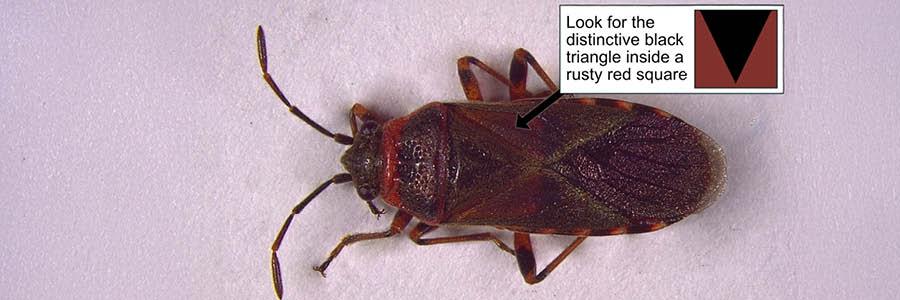
- Appearance: Adults are small (5-7mm;1/3 inch) and can be distinguished by the black triangle located within a rusty red square on their back. Immatures will have a black head and a red abdomen; older nymphs will have black wing pads and a mottled pink abdomen with two spots on their back.
- Season: Most encounters happen in the fall as adults seek out shelter for the winter. They may also be observed during extreme heat events as they seek refuge from the weather.
What are Elm Seed Bugs?
Elm seed bugs (Arocatus melanocephalus) are a recently introduced species to our city that’s originally native to Europe. They have one generation per year, but both adults and immatures can be found at the same time during the summer. Little work has been done on their life cycle in our area, but observations from BC found them to be active from May-September.
What kind of damage is caused by Elm Seed Bugs?
Elm seed bugs primarily feed on the seeds of elm trees, although they are occasionally reported on the leaves of linden and oak. These insects are harmless but can be a nuisance when they seek out shelter in the fall.
How do I control Elm Seed Bugs?
Recommendations for control include typical pest proofing measures:
- check for a tight fit on door sweeps and garage doors
- seal cracks and holes around utility openings (e.g. outdoor faucets, internet/cable wires, gas meters)
- repair gaps in window screens
- rake up elm seeds and leaves – this removes their food source and overwintering habitat, making your yard less appealing
Stressed trees tend to produce more seeds, so ensuring that elms have access to water during drought conditions may help with seed drop.
Chemical application is not a long-term solution for elm seed bug control: research trials show that it has a temporary effect with no impact on the elm seed bug population. Soapy water is recommended for outdoor use; vacuuming is recommended for indoor control due to their unpleasant “bitter almond” smell when crushed.