
Plant a Tree on Your Property
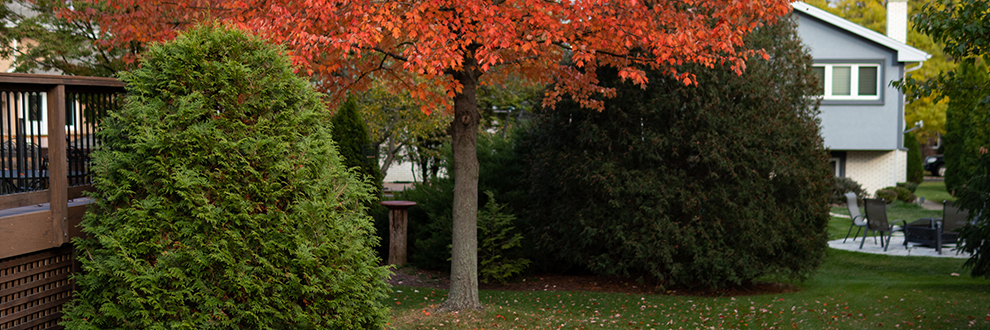
Did you know that trees...
Reduce energy costs for winter heating and summer cooling by up to 24%.
Increase land and property values by up to 20%.
Provide privacy and add character to their surroundings.
Tips to Consider Before Planting a Tree on Your Property
1. Right Tree, Right Place!
Location
Choosing the right spot for your tree is just as important as choosing the right species. To avoid future clearance, maintenance, and nuisance issues—for both you and your neighbors—be sure to consider the tree’s height and canopy size at maturity.
Here are a few general setback guidelines to follow:
- 2.0 m from buildings and fences
- 3.0 m from back lanes
- 3.0 m from driveways
- 1.5 m from walkways
- 1.0 m from irrigation lines
- 5.0 m from existing trees
Planting with these distances in mind will help ensure your tree has enough room to grow safely and thrive for years to come.
Tree Selection
There is no such thing as a perfect tree, but you can minimize future problems by choosing the right tree for the location. Consider the following before planting:
Fruit, cones, or nuts
- Many trees drop cones, nuts, or fruit in the fall. To avoid mess or safety issues, plant these trees where their canopy is away from patios, walkways, sitting areas, and neighboring properties.
Soil moisture
- If your yard has wet or poorly drained areas, either avoid planting there or choose a species that thrives in moist conditions—for example, birch trees.
Exposure to elements
- Trees planted in open, unprotected sites must be suitable for our hardiness zone to withstand wind, cold and other extreme conditions.
2. How to Plant a Tree
Before You DIG - Know What's Below!
Always contact One Call Access before you start digging to locate underground utility lines. This helps prevent damage, service disruptions, and potential injury.
Here are a few general clearance guidelines to follow:
- 1.4 m away from fiber optic lines (e.g., Shaw cable)
- 1.8 m away from SaskEnergy lines
- 0.6 m away from underground electrical (120V to 240V)
- 2.0 m away from underground electrical (greater than 240V)
- 0.5 m away from water and sewer service connections
Time to Plant!
Follow these steps to help your new tree establish strong roots and a healthy start:
Dig the hole
- Make it two to three times wider than the container and taper the sides to create a saucer shape.
Check the depth
- Do not dig too deep—the root collar (where the trunk meets the roots) should sit flush with or slightly above ground level.
Prepare the roots
- Loosen roots around the rootball or make vertical cuts if they are circling the container.
Backfill carefully
- Fill the hole halfway with soil, then tamp firmly around the rootball with your foot to ensure stability.
- Finish backfilling with the remaining soil and tamp again, working in layers to ensure good soil contact and prevent air pockets.
Visit Tree Canada for additional tips on how to plant a tree.
3. Tree Care Tips
How to Water - The Most Critical Factor in Successful Tree Establishment
- Place a garden hose over the root zone of the newly planted tree.
- Water slowly to prevent runoff and ensure deep soil penetration.
- Saturate the soil to a depth of 30 – 45 cm.
- Allow the top 15 cm of soil to dry before watering again. Use a soil probe or screwdriver to check moisture.
- Lawn sprinklers and rainfall are not sufficient for young trees – they often encourage shallow root growth.
- Environmental conditions (soil type, sun exposure, shade, and wind) affect how often watering is needed.
- After a few months, expand the watering area beyond the root zone to the edge of the canopy to encourage roots to fan out, away from root-ball.
Mulch, Mulch, Mulch
- Mulch cools the soil temperature, reduces weeds, and conserves moisture.
- Proper mulching can reduce water evaporation by 35%.
- Mulching can reduce weeds by 45 to 85%, minimizing competition for nutrients and water.
- Apply 8 – 10 cm of organic mulch (e.g., wood chip) over the rootball to the edge of the canopy.
- Keep mulch away from the trunk to avoid injury caused by fungi, pests and rodents.
Maintain the Tree Well
- Remove grass and weeds as they begin to creep back into the tree well—this eliminates competition for moisture.
- A maintained tree well also protects the tree from lawn mower and line trimmer damage.
- Keep herbicides away from the tree's root system, branches, trunk and leaves. Even a small amount of spray or contaminated water can kill a tree.