
Dutch Elm Disease
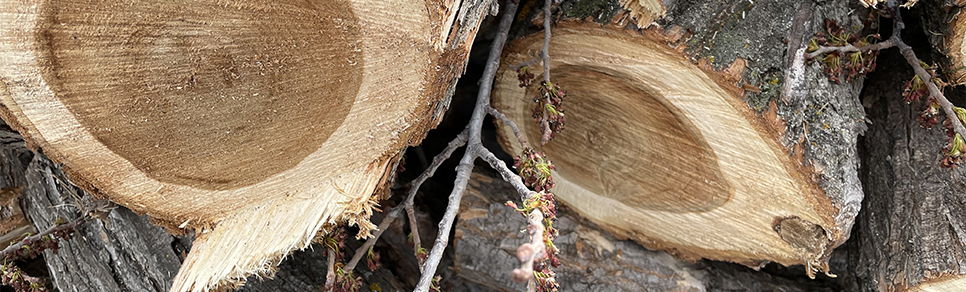
Record number of cases of Dutch elm disease confirmed in Saskatoon.
Dutch elm disease is a serious disease threatening our elm trees and cases are now at record highs.
You can help stop the spread by:
- Never storing elm wood or branches.
- Disposing of all elm wood immediately at the City Landfill, where disposal is free.
- Not pruning elm trees during the provincial ban from April 1 to August 31.
If you suspect an elm tree is dead or diseased, request an inspection by filling out the online form below.
What is Dutch elm disease (DED)?
DED is a serious fungal disease that blocks an elm tree's ability to move water and nutrients. Once infected, the tree will die. DED was introduced in North America in the 1930s and has since wiped out millions of elms across Canada and the United States. In Saskatoon, where elms make up approximately 25 percent of the urban forest, DED poses a significant risk to the city's tree canopy.
How is DED spread?
In Saskatchewan, the disease is spread by several species of elm bark beetles which can fly more than two kilometres in search of elm trees. The fungal spores stick to the beetle’s bodies and infect trees as they feed. The fungus can also be spread through root grafts and unsanitized pruning tools. Human activities such as improper storage or transportation of elm wood can significantly increase the spread of the disease.
What does an elm tree look like?
From a distance, the American elm is one of the easiest trees to identify. The trunk is quite straight and often flares at the base. It forks into a few large, ascending limbs which divide repeatedly into fanning, drooping branchlets, forming a graceful umbrella shaped crown. For more information on identifying elm trees and elm wood, refer to the Elm Identification Handout.
What does DED look like?
Elm trees with DED may start showing symptoms as early as June. Typically, the leaves will start to wilt and turn yellow, then curl and turn brown. Residents who notice any of these symptoms are encouraged to report them as soon as possible by completing the online form below or calling Customer Care at 306-975-2476. Early reporting helps limit the spread of the disease.
How can DED be prevented?
Residents can take a few simple actions to help prevent the spread of DED by:
- Not storing, transporting, selling, purchasing or burning elm wood or branches at any time. These actions are illegal.
- Not pruning elm trees during the provincial pruning ban from April 1 to August 31. Pruning during this time attracts elm bark beetles, which can spread the disease to healthy trees.
- Disposing of all elm wood immediately at the City Landfill, where disposal is free. Do not take elm wood to the Compost Depot or place it in your green bin.
- Sanitizing tools after working on elm trees. For more information on how to sanitize tools properly, the City has drafted a guide for arboricultural and landscaping service providers.
- Not building treehouses in elm trees, as the nail and screw holes can attract elm bark beetles.
- Reporting dead or dying elm trees or branches to the City.
- Keep elm trees healthy and strong through proper care, including regular watering, to help improve resilience and slow the spread of Dutch Elm Disease in Saskatoon.
The most effective way to manage DED is by ensuring elm wood is not stored, transported or burned. Using elm firewood at any time is prohibited and puts Saskatoon's elm trees at risk. These rules help protect the elms that make up approximately 25% of the city's urban forest.
Free Disposal of Elm Wood
Residents and contractors are now able to dispose of elm wood at the Landfill at no cost (for loads up to 1,000kg). This initiative aims to encourage the prompt and proper disposal of elm wood, reducing the risk of disease transmission to healthy elm trees. The City wants to remind residents that an elm pruning ban is in place each year from April 1 until August 31; however, this new initiative means that any elm wood that has been completely removed, previously been cut, has fallen or was intended as firewood can be disposed of for free.
DED Response Plan
If Dutch elm disease has been detected in an elm tree(s) in your area, the City will be taking targeted measures to help prevent further spread and safeguard Saskatoon's elm canopy.
What the City is doing:
- Removing the infected tree(s) immediately and disposing of it safely at the City Landfill.
- Surveying the surrounding area for signs of DED and checking for stored elm wood, which can attract beetles that spread the disease.
- Conducting additional inspections of elm trees within a 1 km radius of the confirmed case(s) for symptoms.
- Continued city-wide elm surveillance and scheduled pruning in parks and along boulevards.
What to expect:
- City staff will be inspecting property for elm firewood or brush, as elm wood cannot be stored or transported.
- If elm wood is found while you are away, staff will first try to contact you by phone or by returning at another time before taking action. If necessary, an Elm Infraction Notice will be issued explaining what was removed.
- Inspections, including elm wood checks, removals and tree sampling, are authorized under The Forest Resource Management Act and the Provincial Dutch Elm Disease Regulations, 2005.
- In accordance with the regulations, property owners may be required to remove and dispose of infected elm trees at their own cost.
Need help with tree identification?
To request a tree inspection or identify elm wood, please complete the online form using the button below or call 306-975-2476.
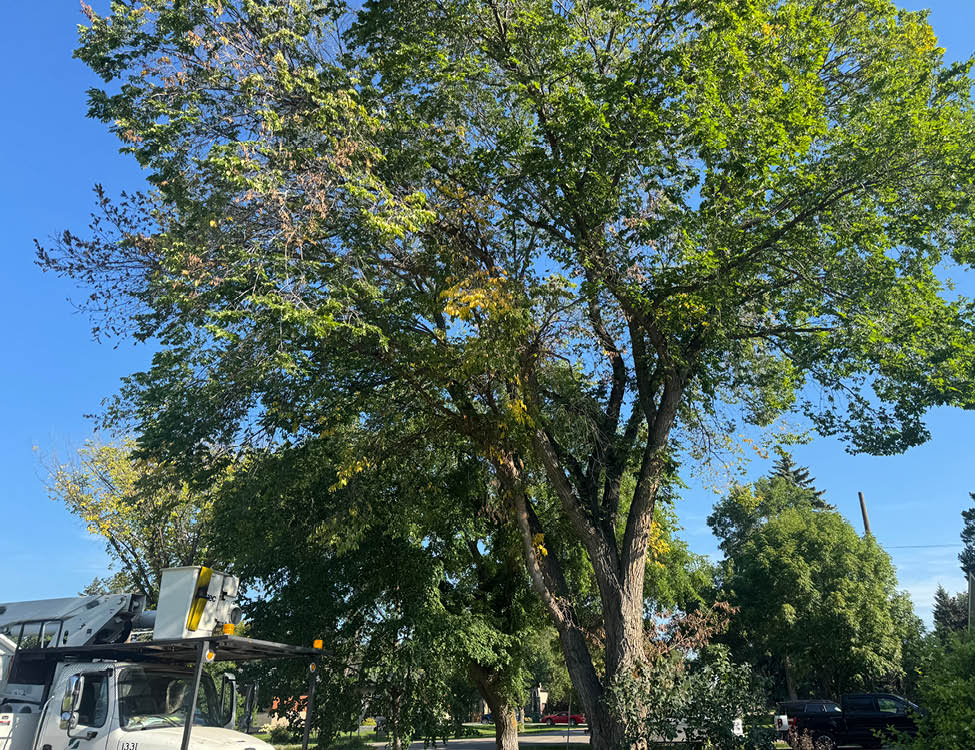
DED infected tree
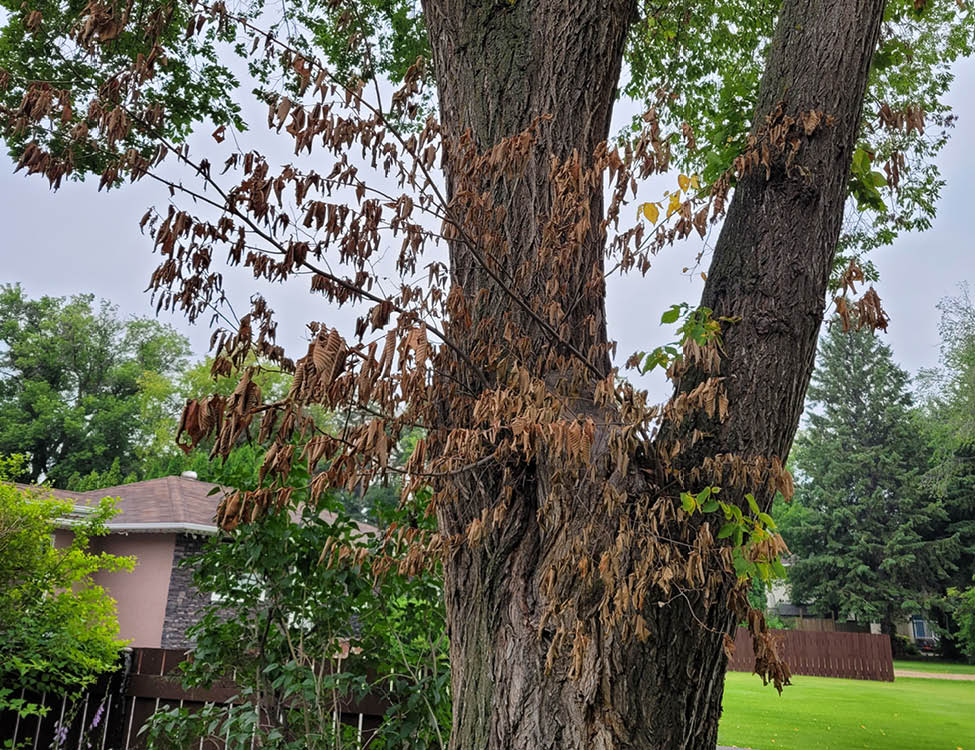
DED infected leaves
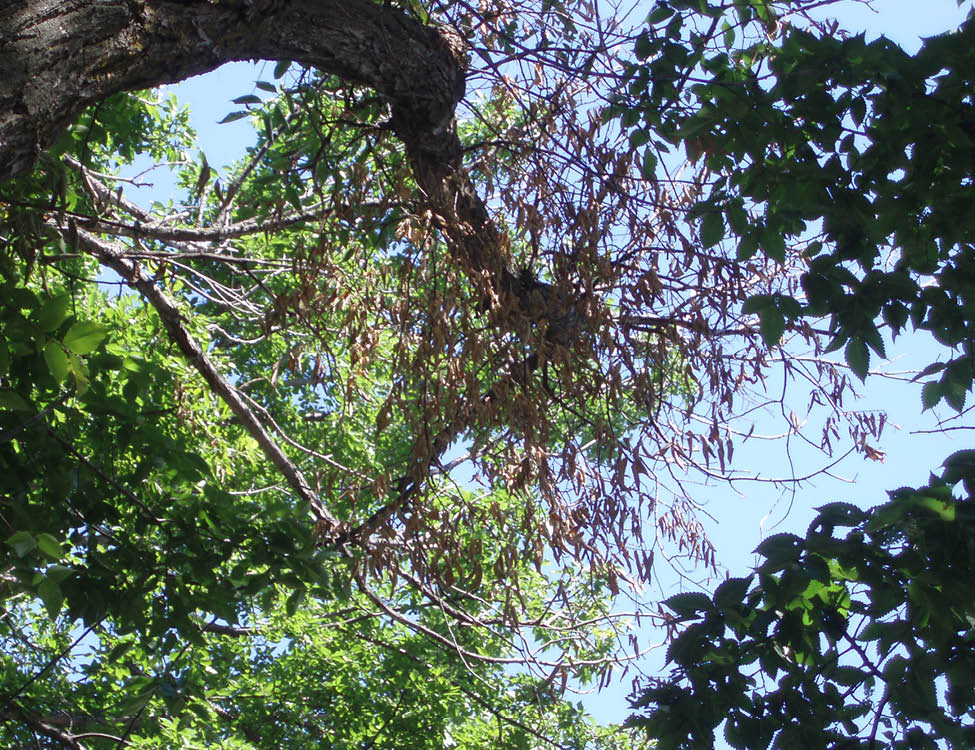
Elm DED infected curled leaves
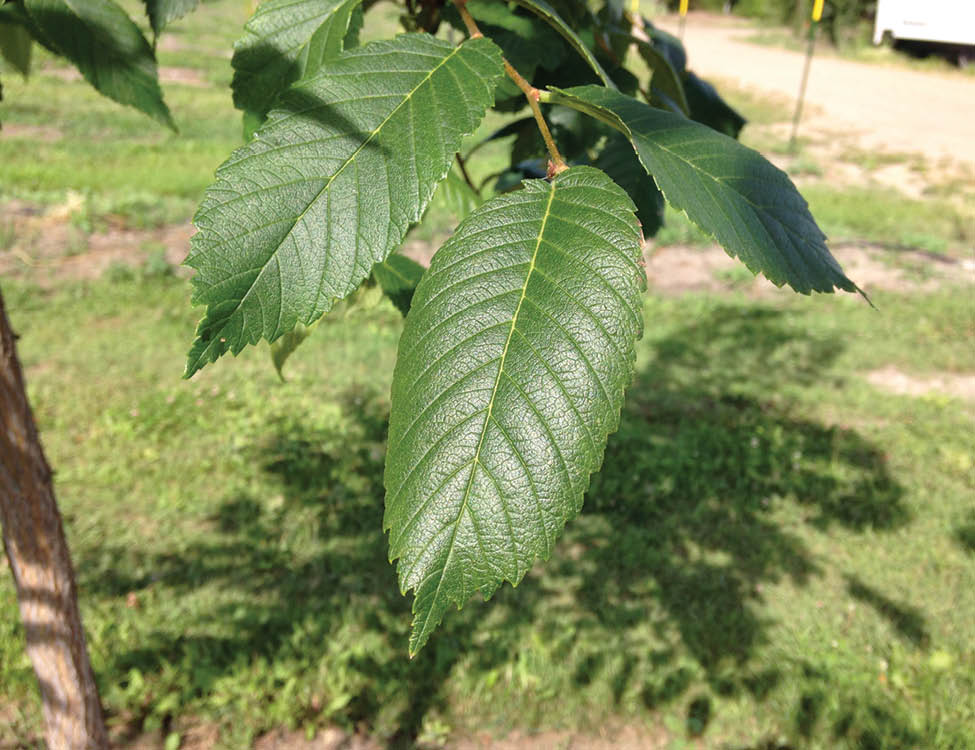
Healthy elm leaves
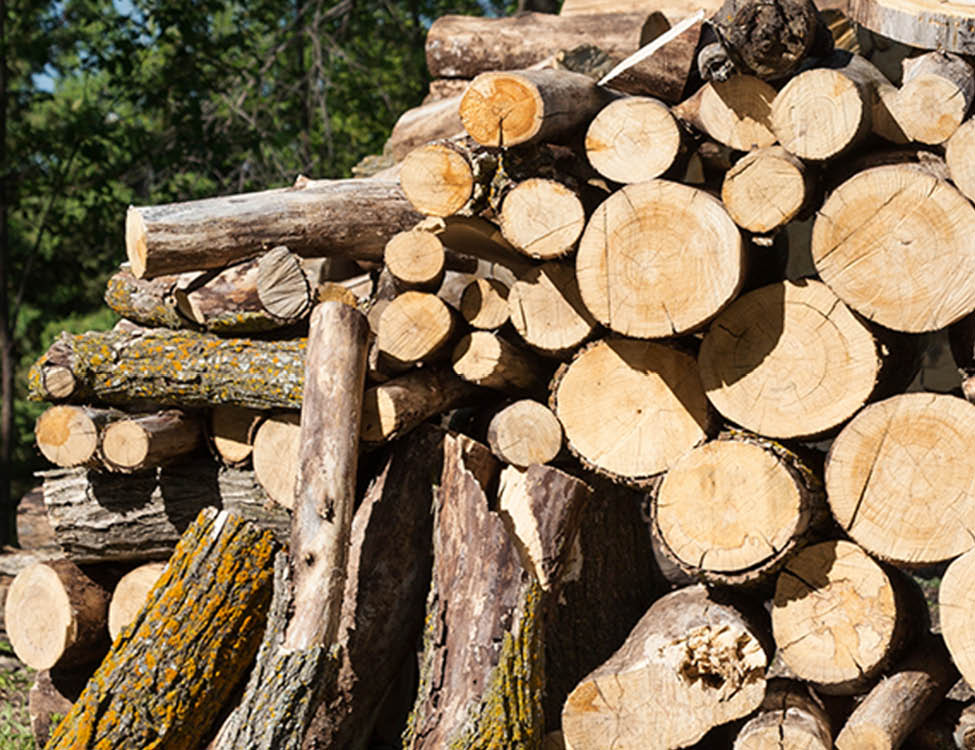
Elm firewood
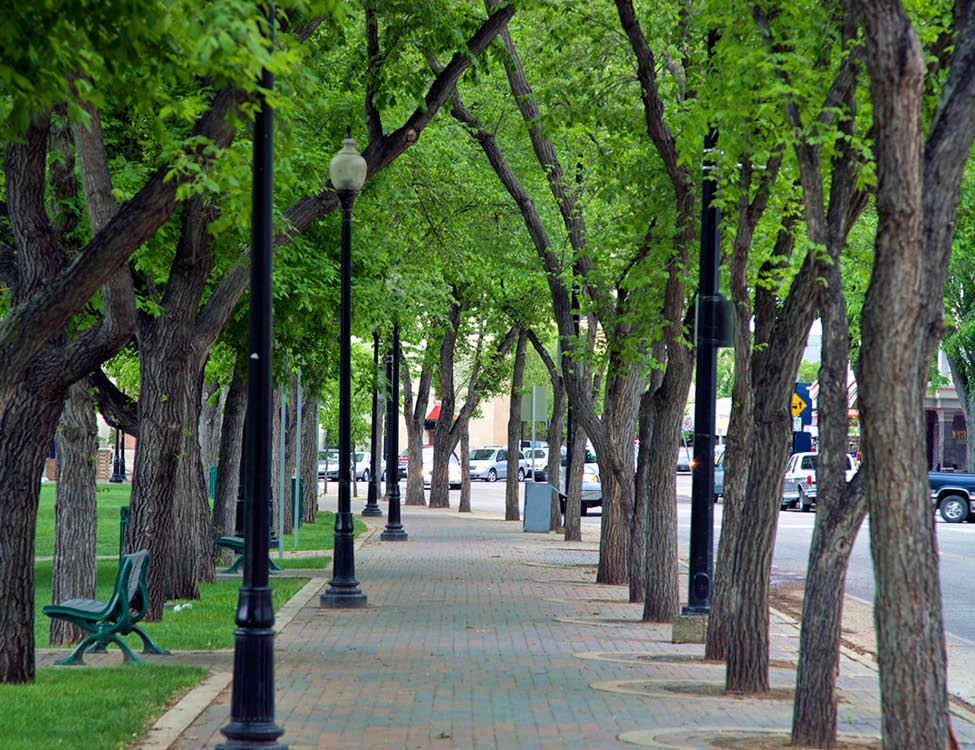
Saskatoon elm trees
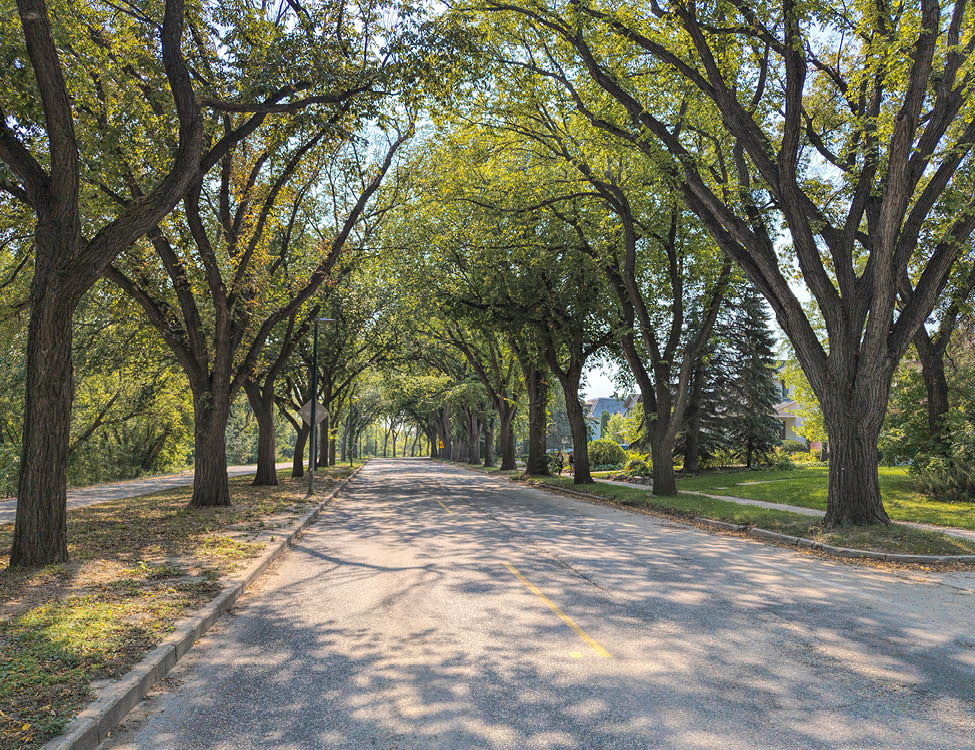
Elm tree canopy along Spadina
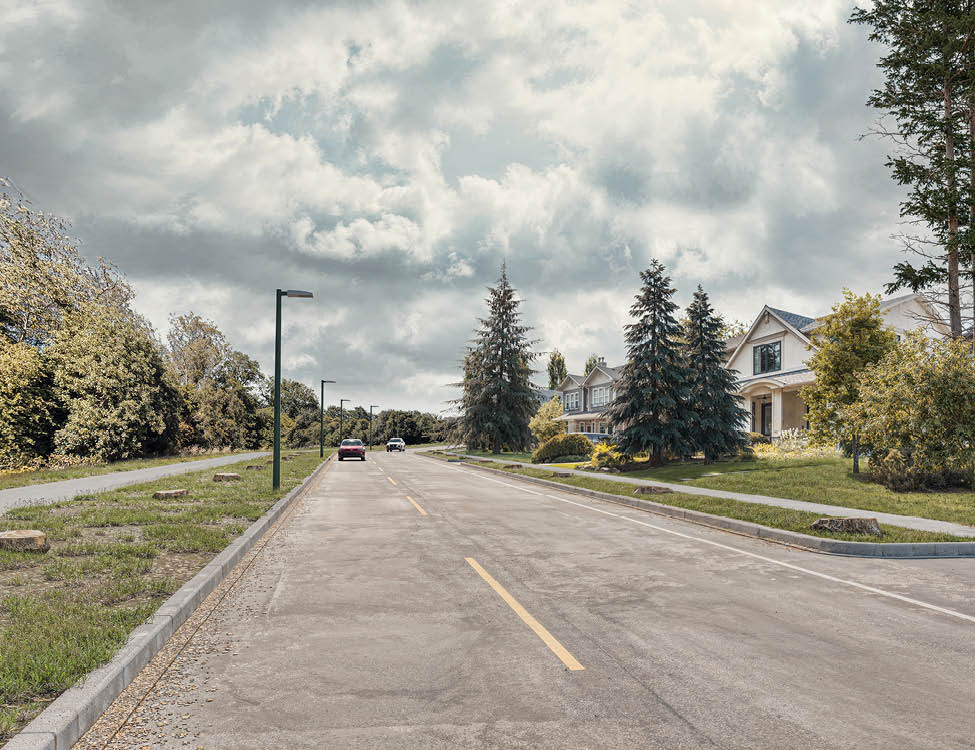
Elm trees removed along Spadina (rendering)
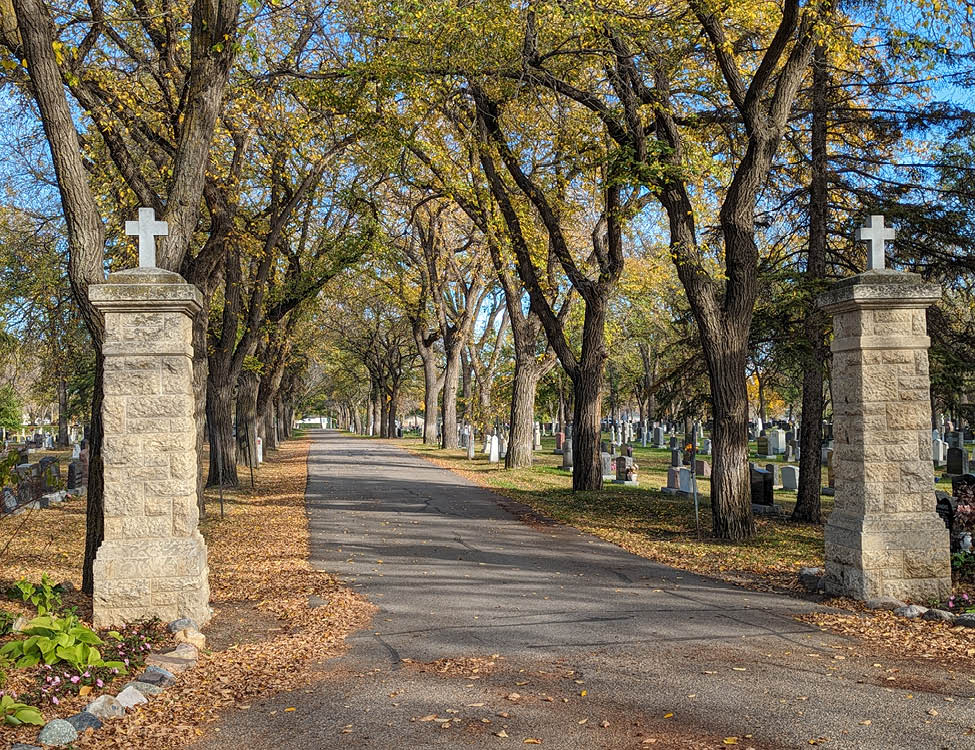
Elm trees at Woodlawn Cemetery
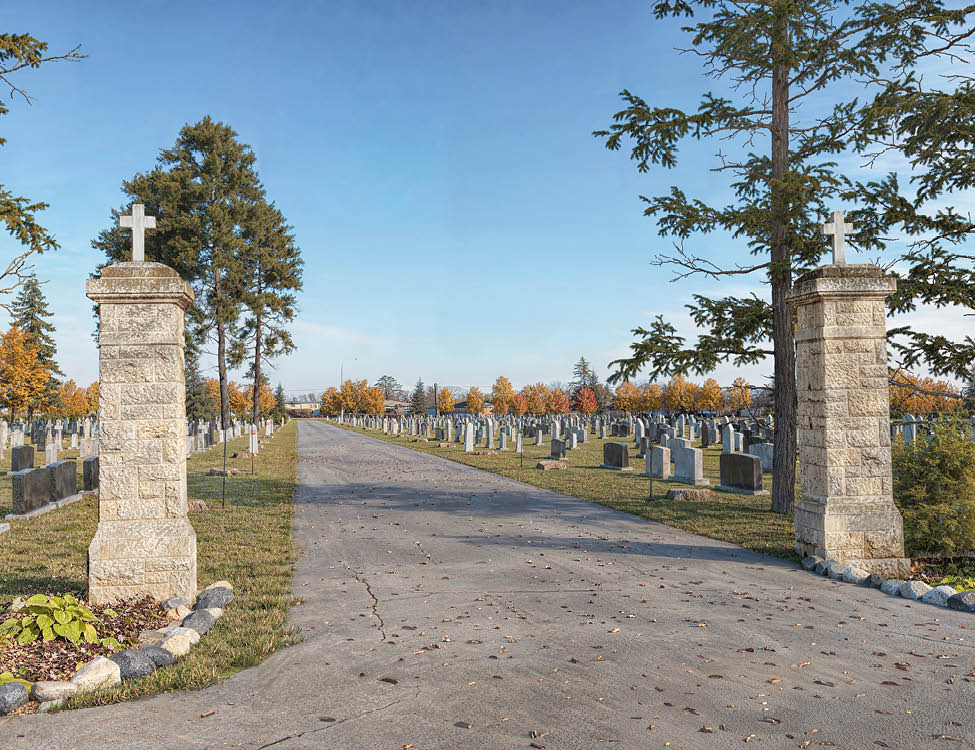
Elm trees removed at Woodlawn Cemetery (rendering)