
Urban Reserves and Land Holdings
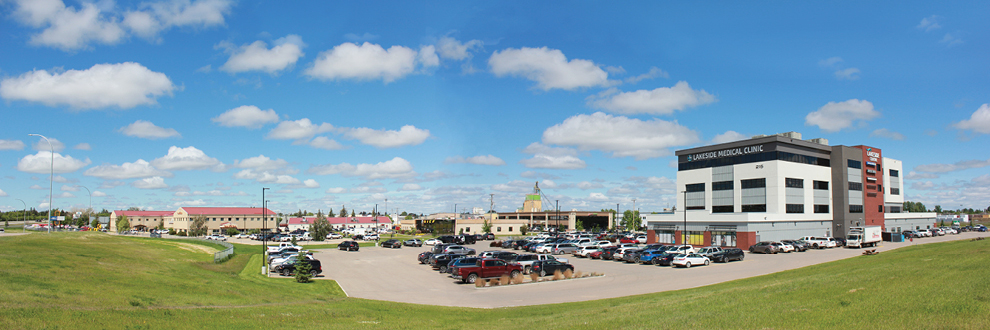
First Nations Urban Reserves
Urban reserves help tell an important story about our City, Treaty relationships and shared growth. In simple terms, an urban reserve is land within the boundaries of a city that a First Nation buys on the open market, which then goes through a process with the federal government that may result in reserve status being granted. Just owning the land does not make it a reserve.
Urban reserves create real benefits for everyone. For First Nations, they can open the door to new businesses, more jobs and greater financial independence for the growing number of First Nation people living off their home reserve. For Saskatoon, urban reserves can bring new investment, help renew existing properties and support economic growth. Urban reserves are also a concrete way to honour Treaty relationships and respond to the Truth and Reconciliation Commission’s Call to Action #92, which calls on municipalities to support Indigenous economic participation through education and employment.
People are often surprised that an urban reserve does not look different from other city properties. It could be a hotel, school, bank, gas station, business park, or residential subdivision. In other words, it fits into the city around it. If you’ve filled up your car, drank a Starbucks or visited a medical clinic in Saskatoon, you may have been on an urban reserve and not even known it.
Saskatoon currently has several urban reserves, eight as of 2026. There are also several urban land holdings that are still working on federal status. An urban holding is land that has been purchased by a First Nation but not yet granted reserve status and as such, remains under City jurisdiction. This land is the same as any other land in the City.
See our Common Questions about Urban Reserves in Saskatoon for more information.
At its heart, the urban reserve model is about respect, partnership and opportunity. It helps First Nations build for the future while helping cities grow in a more inclusive way. In Saskatoon, urban reserves are not only pieces of land. They are part of building a stronger community together.
The City of Saskatoon’s Role
When land becomes an urban reserve, the First Nation has jurisdiction and authority over the land, rather than the City. This does not mean that City services or payment for City services are not provided. Through a Municipal Services and Land Use Compatibility Agreement as well as a Police Services Agreement, the City and the First Nation work together and agree on bylaw and land use compatibility and payment to the City for all services provided, in the same way taxes pay for those services for non-reserve properties in the City. The fee-for-City service matches what would have been paid in municipal and library property taxes, and in return the City provides services such as fire protection, policing, snow removal and infrastructure repairs, same as to non-reserve properties.
The same or similar building and fire standards, public health and safety, and business regulations that exist on non-reserve properties apply to urban reserve properties through the Agreement. This may mean that the City provides regulatory services such as building inspections and business licensing to ensure that what’s built on reserve is compatible with the rest of the community and vice versa. The intent is that there is a seamless transition between urban reserve land and non-reserve land, achieved through compatibility.
The Indigenous Land Developer's Resource
The City of Saskatoon welcomes all Indigenous investors considering opportunities for investment and economic development in Saskatoon, including First Nations who may wish to establish an urban reserve within Saskatoon. While the urban reserve creation process is led by federal and provincial governments, the City has an active role in the process.
A Developer’s Handbook has been developed to provide a guided approach to those who intend to develop land within the City of Saskatoon, with a section specifically focused on First Nations who may wish to establish an urban reserve within the city.
The handbook provides information on what you need to know before purchasing and developing land, including:
- Important plans and policies
- Re-zoning and subdividing land
- Developing un-serviced or fully serviced land
- Preparing a land development proposal
- Opportunities for development incentives
- Environmental considerations
- Key stakeholders, including major utility providers
- Establishing an urban reserve
The City encourages those interested in developing land in Saskatoon to contact the Planning & Development Department at regional.planning@saskatoon.ca or 306-975-2645 before purchasing land to ensure the site selection, building plans and development interests align with municipal regulations and requirements.
For more information on Urban Reserves or to learn more about First Nations with land interests in Saskatoon and area, visit saskatoon.ca/urbanreserves.
Home to the First Commercial Reserve in Canada
The City of Saskatoon is home to the first commercial urban reserve in Canada. This urban reserve, Asimakeniseekan Askiy, was created by Muskeg Lake Cree Nation in 1988. Its creation pre-dates the drafting and signing of the Treaty Land Entitlement (TLE) Framework Agreement, signed by Canada, Saskatchewan and approximately 30 First Nations in the Province in 1992. It is fair to say that the enduring relationships and work done by Muskeg Lake Cree Nation and the City of Saskatoon laid the foundation for the TLE Framework Agreement and the resulting process to settle outstanding land claims throughout the Province, ever since.
The promotional video below features a panel discussion with leadership from Muskeg Lake Cree Nation and the City of Saskatoon who were directly involved with establishing the urban reserve.
This video is being shared with you on behalf of the project team and the leadership from Muskeg Lake Cree Nation and the City of Saskatoon.
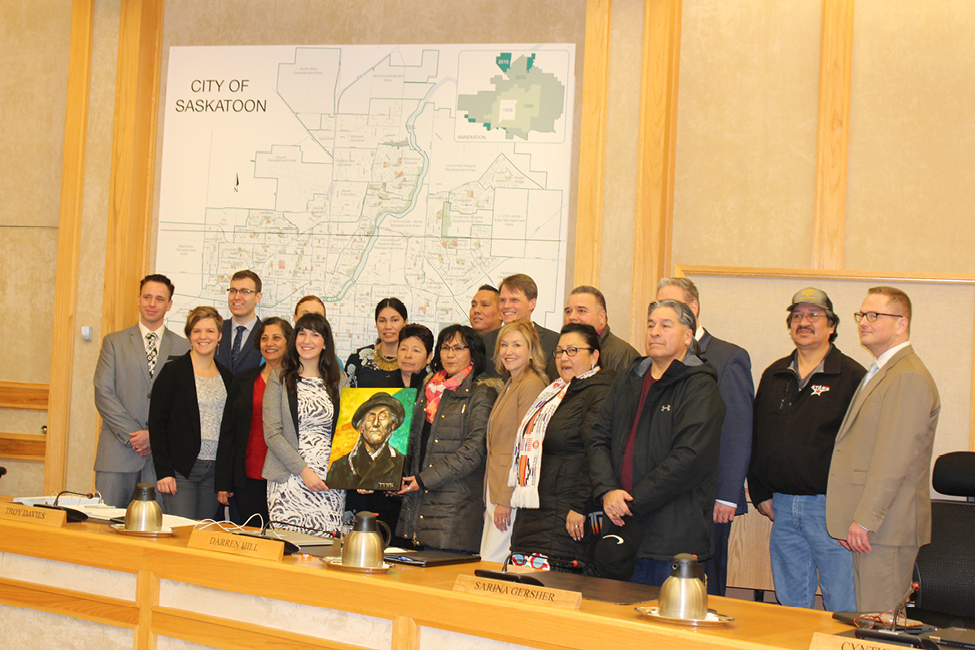
Thunderchild First Nation Municipal Service Agreement Signing Ceremony 2018
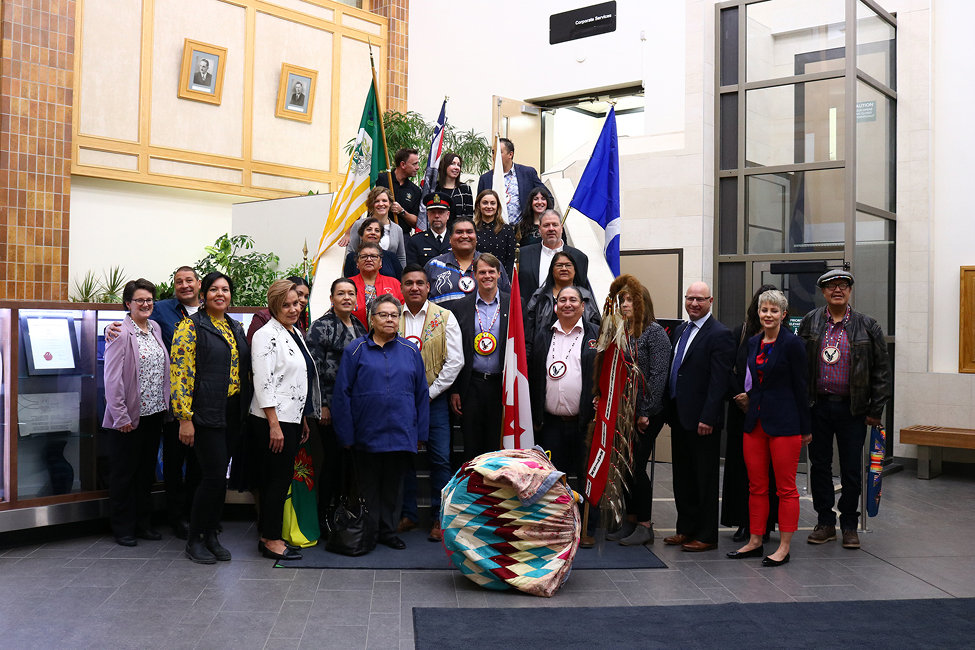
Kahkewistahaw Municipal Service Agreement Signing Ceremony 2021
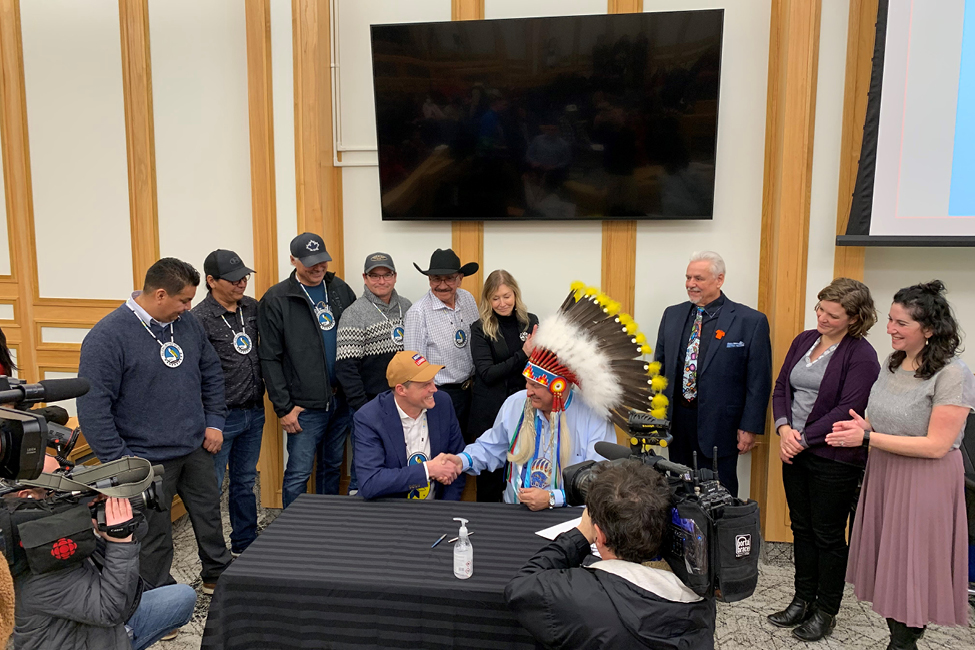
Pelican Lake Municipal Service Agreement Signing Ceremony 2022
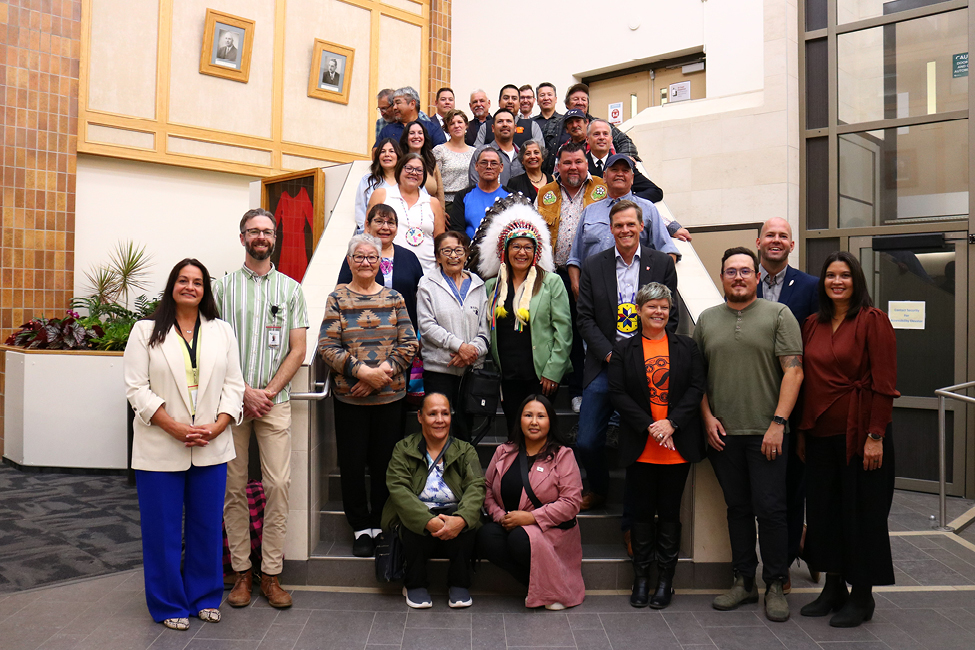
Lac La Ronge Indian Band Municipal Service Agreement Signing Ceremony 2023
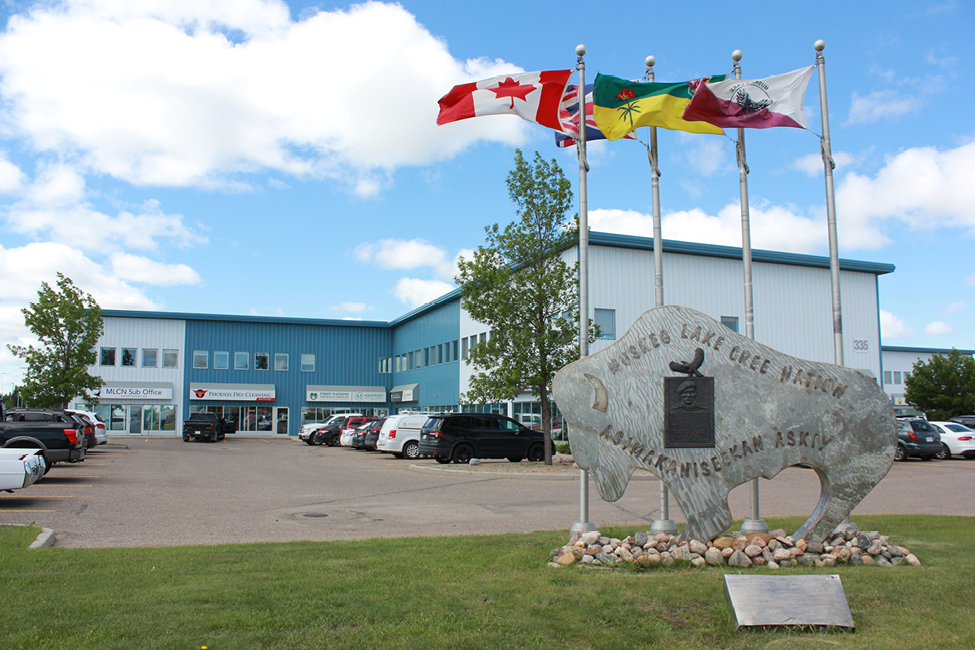
Muskeg Lake First Nation First Commercial Urban Reserve in Canada 2024
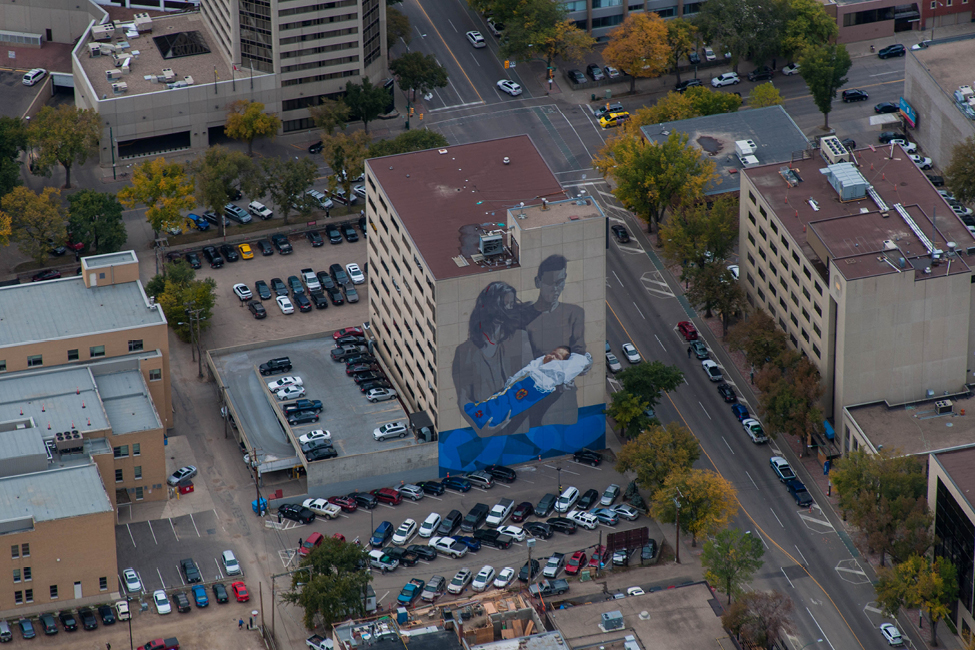
Aerial View of Yellow Quill First Nation’s Urban Reserve Art Mural 2017