
Cotton Ash Psyllid
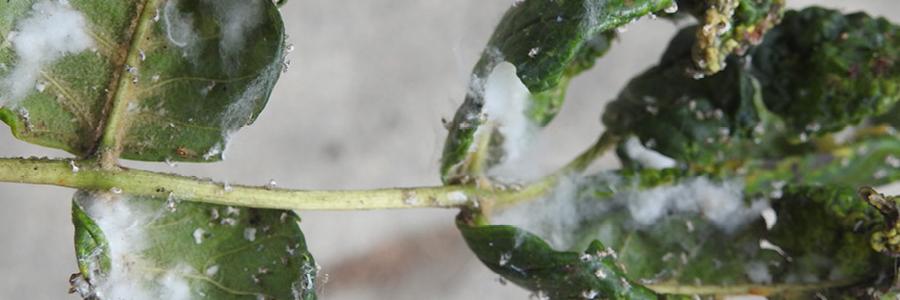
Tree affected by Cottony ash psyllid
What is cottony ash psyllid?
Cottony ash psyllid (CAP) is a non-native pest that is impacting black and mancana ash trees throughout the city. These trees are particularly susceptible to this pest and the combination of dry conditions and an insect infestation can eventually lead to tree loss.
What does cottony ash psyllid look like?
CAP are very small (2.95-3.57 mm), light green to yellow-green pests. Because of their size, the presence of psyllids is most easily recognized by the damage they create:
- White cotton curled within or along leaves.
- Heavily infested trees will often be partially defoliated with some of the remaining leaves twisted into a corkscrew or cauliflower shape.
What trees are impacted by psyllid?
The susceptible trees include:
- Black Ash - Fraxinus nigra and the cultivar ‘Fallgold’
- Manchurian Ash – Fraxinus mandshurica and the cultivar ‘Mancana’
- ‘Northern Treasure’ and ‘Northern Gem’ which are a cross between Black Ash and Manchurian Ash.
Green ash, white ash, and mountain ash are not impacted.
How prevalent is the cottony ash psyllid in Saskatoon?
Saskatoon is currently experiencing a CAP outbreak. In 2016, large numbers of CAP were discovered in trees planted within concrete cut-outs in our central business districts and the surrounding neighbourhoods. City-wide canopy inspections conducted in 2017 and 2018 found that most susceptible trees have some level of infestation.
What is the City doing in response to this outbreak?
In 2018, the City removed approximately 1,600 ash trees from boulevards and parks that were identified as having 50% or less leaf cover. An assessment of the remaining City-owned ash trees found an additional 2,900 trees as meeting removal criteria. The 2019 budget allows for 2,100 boulevard tree removals. The remaining 800 park trees will be removed in 2020.
Is there anything that can be done to stop this insect from destroying ash trees?
Unfortunately, there is no quick or easy solution to stop this invasive insect. It is moving quickly and there are few proven or effective options for stopping it. Other prairie cities have found that while the investment in chemical controls has slowed its destruction it did not stop the loss of trees. Although certainly devastating, increasing the diversity of our overall forest by replacing these trees with non-ash species will be beneficial in the long term.
The best approach to keep tree(s) less vulnerable to insect infestations is to water between rainfalls, protect your trees from root or trunk damage, and avoid the use of herbicides or excessive salts in the soils near trees.