
Spotted Hyena
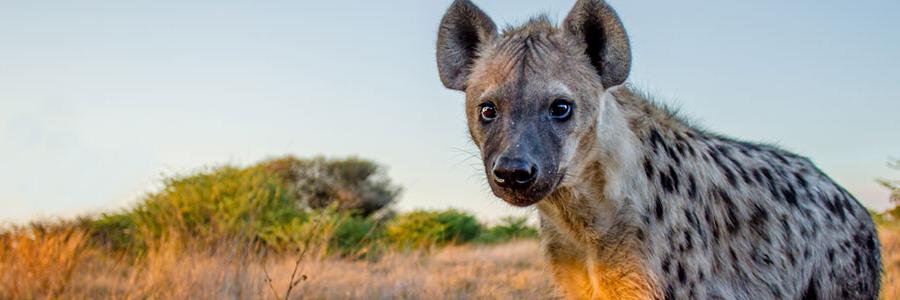
Risks: Major risks include habitat loss and fragmentation, reduced prey populations, conflict with people and livestock owners, and persecution or poisoning.
Diet: Large mammals such as antelope, zebra and wildebeest; also smaller animals, birds, eggs, insects and carrion.
Height: Shoulder height approximately 75–85 cm; body length 95–150 cm, with a 30–36 cm tail.
Weight: Approximately 45–80 kg; females are usually larger and heavier than males.
Fun Facts
- Every spotted hyena has a unique pattern of spots. Like a fingerprint, their spot patterns can help people tell individuals apart.
- Their powerful jaws allow them to crush and eat bones, helping recycle nutrients back into their ecosystem.
Who’s New at the Zoo? Meet Marlon the Spotted Hyena
The Saskatoon Zoo is excited to welcome Marlon, a spotted hyena and the newest member of the Zoo family.
Known for their distinctive spotted coats and powerful jaws, spotted hyenas are among Africa’s most recognizable carnivores. As both predators and scavengers, they play an important role in maintaining healthy ecosystems.
Marlon was raised in human care and came to the Zoo in need of a permanent home. Because he cannot safely join a typical hyena clan, he lives independently and will receive specialized daily care, enrichment and attention from the Zoo’s animal care specialists.