
Grizzly Bear
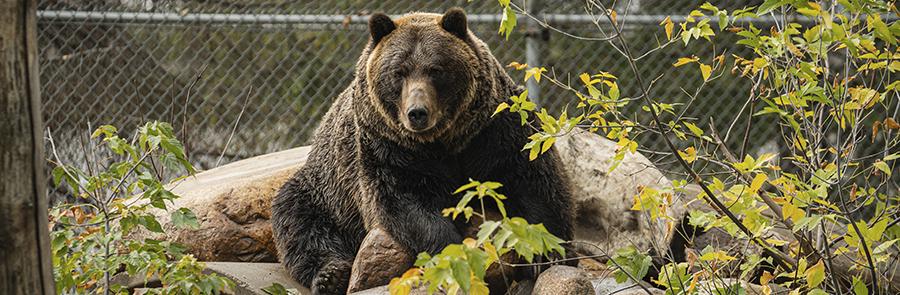
In memory of Koda
Koda was more than a grizzly bear at the Saskatoon Forestry Farm Park & Zoo, he was a familiar and much-loved part of our community for 18 years.
From watching him play and forage alongside his brother, Mistaya, to seeing his unique personality shine during training and enrichment, generations of visitors and Zoo staff formed a connection with Koda. He helped people of all ages learn about grizzly bears, wildlife conservation and the importance of caring for animals and their habitats.
Following a recent decline in his health, Koda was humanely euthanized after careful consideration of his comfort and quality of life.
Koda will be deeply missed. Our animal care team will continue to closely support and monitor Mistaya as he adjusts to this loss.
Visitors are invited to sign a memorial card for Koda at the Kinsmen Bear Habitat later this week.
For more information, read the full media release Saskatoon Forestry Farm Park & Zoo mourns the loss of Koda the grizzly bear.
Diet: Their diet includes moose, elk, caribou, deer, sheep, bison, salmon, trout, bass, birds, rodents, nuts, tubers, fruits, ground squirrels and small mammals.
Height: 198 to 240 cm; stands 102 cm tall at the shoulder.
Weight: Males weigh between 139 to 400 kg and females weigh between 95 to 250 kg.
Lifespan: Grizzly bears live 22-26 years in the wild, and up to 40 years in zoos.
Fun Facts
- The claws of a grizzly bear can be up to 10 cm (4 in) long. They are used for hunting, digging and gripping prey.
- Grizzly bears go through a mild form of hibernation called torpor. During this time, their heart rate slows down to as low as 8 beats per minute. They do not eat, drink, defecate or urinate during torpor.
- Though they look big, heavy, and lumbering, they can really hustle, hitting speeds up to 56 km per hour for short bursts.
About Us
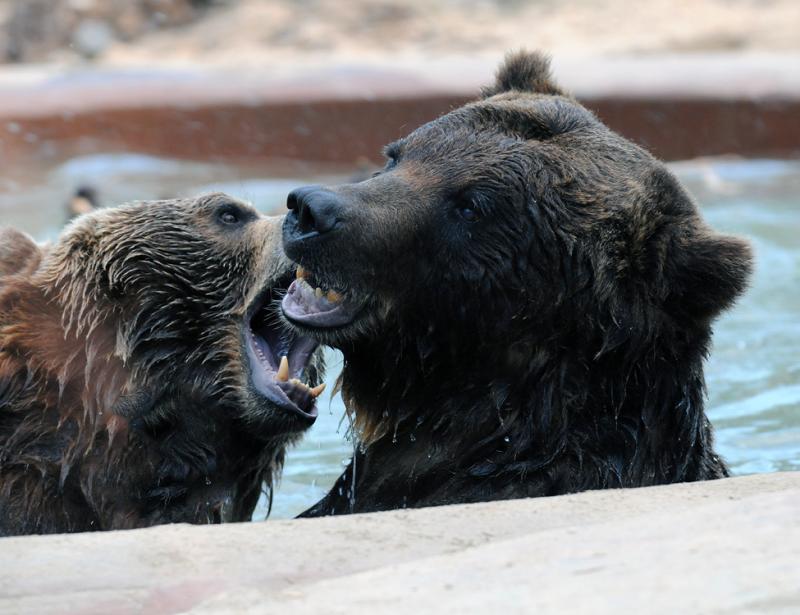
If you catch them on the right day, you may see grizzly bears Koda and Mistaya wrestling, digging or playing in their pond at the Kinsmen Bear Exhibit. The habitat has been home to the pair since 2008.
Mistaya is the sole surviving cub from Bear 66 who died in Banff National Park in 2005. He stayed in the wild until it became clear that he could not survive without intervention. Koda was an orphaned cub from the Jasper area who was rescued and nurtured by zookeepers at the Edmonton Valley Zoo. The cubs were paired at the Calgary Zoo and later transferred to their permanent home in Saskatoon.
Conservation & Research Initiatives
Can concentrations of steroid hormones in brown bear hair reveal age class?