
Snow Leopard
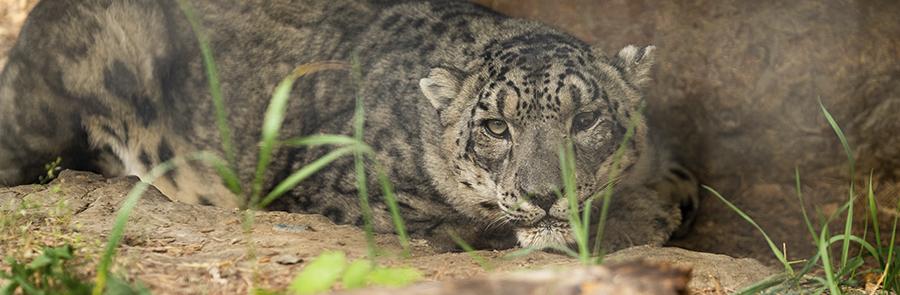
Saskatoon Zoo shares the loss of Kazi the snow leopard
The Saskatoon Forestry Farm Park & Zoo is saddened to share that Kazi, the Zoo’s 19-year-old snow leopard, was humanely euthanized this past weekend following a period of veterinary care.
Kazi had been closely monitored by the Zoo’s animal care and veterinary teams as his health declined due to advanced age. After careful and ongoing assessment of his condition and quality of life, the difficult decision was made to euthanize him.
Kazi had just turned 19 in June. He played an important role in the Snow Leopard Species Survival Plan Program for several years before enjoying his retirement at the Saskatoon Forestry Farm Park & Zoo. Kazi was born at the Toronto Zoo and later came to Saskatoon from the Edmonton Valley Zoo.
He was a valued member of the Zoo family and will be deeply missed by the staff who cared for him, as well as by the many visitors who came to know him over the years.
Snow leopards are often called the “ghosts of the mountains” because of their remarkable camouflage and elusive nature. Even in his habitat, Kazi could sometimes be hard to spot, often found resting high on his wooden structure or tucked beneath it near his favourite rock. For many guests, catching sight of Kazi was a special and memorable part of visiting the Zoo.
“Caring for animals also means making difficult decisions when their quality of life declines,” said Jeff Mitchell, Zoo Manager. “This was not a decision made lightly. Our team cared deeply for Kazi and we are grateful to the animal care and veterinary professionals who supported him with compassion every step of the way.”
Animals like Kazi create lasting connections with our community. We know many residents and visitors will share in this loss and we thank them for their care and compassion as our team mourns his passing.
The Zoo will set up two commemorative signs later this week outside the snow leopard habitat, where visitors will be welcome to leave a message for Kazi.
Risks: Risks to snow leopards include habitat loss, climate change and poaching.
Diet: Snow Leopards are carnivores and their diet consists of mostly blue sheep, Argali wild sheep, ibex, marmots, pikas and hares.
Height: 4 to 5 ft tall; 91 to 130 cm body length and tail length is 79 to 99 cm.
Weight: 34 to 54 kg
Fun Facts
- Snow Leopards are well adapted for Saskatchewan winters and use their extra long tail to wrap around their body for extra warmth and their fur-covered feet act as natural snowshoes.
- Snow Leopards are very agile. Their short forelimbs and long hind legs allow them to navigate steep and rugged terrain with ease.
- Each snow leopard has a unique pattern to their fur providing camouflage while stalking prey.
Conservation Initiatives
The Saskatoon Forestry Farm Park & Zoo is proud to participate in Association of Zoos and Aquariums (AZA) cooperatively managed Species Survival Plan® (SSP) Programs. SSP Programs are led by expert advisors who cooperatively work together to maximize genetic diversity, appropriately manage the demographic distribution and long-term sustainability.