
News Releases
Saskatoon Fire - News Releases
Weekend Road Report, August 25-26
August 24, 2018 - 9:00am
*This report includes road restrictions on Priority 1 (high traffic, high speed) streets only.
NEW
22ND ST E EB MEDIAN LANE CLOSED AT IDYLWYLD DR S
(Gas valve maintenance)
Start: August 26, 6:00 a.m. End: August 26, 7:00 a.m.
COLLEGE DR EB CURB LANE CLOSED FROM SPADINA CRES E TO SASKATCHEWAN CRES E
(Minor bridge repair)
Start: August 25, 7:00 a.m. End: August 25, 5:30 p.m.
NEAULT RD NB & SB LANES CLOSED FROM 22ND ST W TO 33RD ST W
(Roadway patching)
Start: August 26, 7:00 a.m. End: August 26, 4:00 p.m.
LOUISE AVE NB & SB LANES CLOSED FROM TAYLOR ST E TO 3RD ST E
(Road resurfacing)
Start: August 25, 7:00 a.m. End: September 1, 5:00 p.m.
5TH AVE N NB & SB LANES CLOSED FROM QUEEN ST TO 26TH ST E
(Rooftop crane setup)
Start: August 26, 8:00 a.m. End: August 26, 1:00 p.m.
115TH ST E EB & WB LANES CLOSED FROM BRADWELL AVE TO SPRUCE DR
(Water main replacement)
Start: August 26, 8:00 a.m. End: September 22, 4:00 p.m.
NIGHT WORK
115TH ST E EB & WB LANES CLOSED FROM BRADWELL AVE TO SPRUCE DR
(Sewer lining)
Start: August 24, 7:00 p.m. End: August 25, 7:00 a.m.
ONGOING
LORNE AVE NB & SB LANES CLOSED FROM JASPER AVE TO EXHIBITION GROUNDS RD
(Water main connection)
Start: August 21, 7:00 a.m. End: August 27, 7:00 p.m.
2ND AVE S NB ROAD CLOSED FROM SPADINA CRES E TO 19TH ST E
(Catch basin installation)
Start: August 24, 12:00 p.m. End: August 28, 5:00 p.m.
21ST ST E WB ROAD CLOSED FROM 2ND AVE S TO 1ST AVE S
(Fibre installation)
Start: August 23, 7:00 a.m. End: August 28, 5:00 p.m.
115TH ST E EB & WB LANES CLOSED FROM SPRUCE DR TO INNES CRT
(Water main rehab)
Start: July 19, 9:00 a.m. End: August 29, 4:00 p.m.
TAYLOR ST E EB CURB LANE CLOSED AT ARLINGTON AVE
(Intersection improvements)
Start: August 13, 7:00 a.m. End: August 31, 5:00 p.m.
MCCLOCKLIN RD NB & SB CLOSED FROM RICHARDSON RD TO CLAYPOOL DR
(Roadway removal, underground utilities & roadway construction)
Start: August 14, 9:00 a.m. End: August 31, 6:00 p.m.
RUSHOLME RD ALL LANES CLOSED AT AVE J S
(Water main replacement)
Start: August 17, 7:00 a.m. End: August 31, 7:00 p.m.
IDYLWYLD CRES NB & SB LANES CLOSED FROM 11TH ST E TO IDYLWYLD DR S
(Sewer rehab)
Start: August 7, 7:00 a.m. End: September 4, 6:00 p.m.
4TH AVE N NB CURB LANE CLOSED FROM 22ND ST E TO 23RD ST E
(Exterior finishing)
NB traffic maintained with realignment
Start: July 8, 7:00 a.m. End: September 10, 5:00 p.m.
CIRCLE DR E SB CURB & CENTER LANES CLOSED AT 8TH ST E
(Water main maintenance)
Start: July 30, 9:00 a.m. End: September 14, 5:00 p.m.
COLLEGE DR CLOSED FROM CENTRAL AVE TO CIRCLE DR E
(Ditch excavation)
Start: July 26, 9:00 a.m. End: September 14, 6:00 p.m.
CENTRAL AVE SB LANES CLOSED FROM KONIHOWSKI RD TO FEDORUK DR
(Roadway construction)
Two-way traffic will be accommodated in the NB lanes.
Start: November 6, 7:00 a.m. End: October 1, 5:00 p.m.
All restrictions will be lifted as indicated, weather permitting and barring any unforeseen circumstances.
Slow down, pay attention and respect work zones. Watch for pedestrians and work crews, and for everyone’s safety, please obey all detours, signs and barriers.
Purchasing, using, and maintaining life-saving flotation devices
August 23, 2018 - 7:01am
Each year, water enthusiasts head out to the many lakes and rivers across the country to indulge in water sports and activities. This can be an excellent way to spend some time enjoying the outdoors with friends and family, but only when done safely and responsibly. The Saskatoon Fire Department would like to emphasize the importance of having and maintaining the proper flotation equipment so that it is ready to use.
Lifejackets and personal flotation devices (PFDs) are an integral element of staying safe when in or around larger bodies of water. Slight variations between the function and purpose of lifejackets and PFDs exist; however, both act as a life-saving flotation device.
Start by selecting the appropriate flotation device for your desired purpose. Be sure that the flotation device is Transport Canada approved, and that it is the proper fit relative to your weight and body type.
Remember that if the activity you are participating in involves a human- or motor-powered watercraft, you are required by law to have a Transport Canada approved lifejacket or PFD for each person on board the craft.
Never use your flotation device for purposes that it was not intended for; this could cause damage and wear that will affect the functionality of the flotation device. If the flotation device is expired, altered, ripped, or otherwise misshapen, it is no longer effective and must be replaced.
When finished with your flotation device, make sure it is stored properly in a dry and airy location. If the flotation device is wet, allow ample time for drying, keeping in mind that it should be out of direct sunlight and never be dried using a direct source of heat, such as radiators or dryers.
Always exercise safe practices when in or around larger bodies of water. Wear your Transport Canada approved lifejacket or PFD.
In an emergency, call 911 immediately.
Do Not Use water advisory lifted in Rosewood
August 23, 2018 - 7:13am
With the approval of the Water Security Agency, the City of Saskatoon has lifted the Do Not Use water advisory for the Rosewood Commercial Area, including Meadows Market. The area has been under an advisory since May 11, 2018 after potential hydrocarbon contamination was discovered in a few area hydrants.
“This type of contaminant was something we had no experience with so we needed time to conduct comprehensive testing and formulate a careful approach to remediation,” says Angela Gardiner, Acting General Manager of Transportation & Utilities. “The process to lift the water advisory wasn’t a quick one but it was thorough which means we can feel confident in lifting the advisory and returning the area to full use of the permanent underground water supply.”
“Initially, all that was understood was that a black substance was identified in certain hydrants that potentially contained hydrocarbon properties,” says Chris Mathies, Principal & Sector Leader with Environmental Services at Stantec—a global engineering firm contracted to lead remediation. “We now know that the water quality in the Rosewood Commercial Area was not compromised. As a precautionary measure, remediation activities were carried out to thoroughly clean and test the water infrastructure.”
Inspections and remediation activities conducted in June-July 2018 included:
• Camera inspections of water distribution system with a high definition camera to assess conditions before and after remediation.
• High pressure flushing and regular flushing.
• Scrubbing, also known as pigging.
Since the completion of inspection and remediation activities, confirmatory testing has been ongoing to verify that the water continues to meet all drinking water standards. Properties located within the Rosewood Commercial Area, including Meadows Market, received notification that the advisory had been lifted earlier today.
Return of the Bus Stop Blues! Residents asked for input on improvements
August 22, 2018 - 6:12am
Saskatoon Transit is asking residents to nominate bus stops for improvements or shelter replacement.
The Bus Stop Blues campaign kicks-off today on Saskatoon Transit Twitter, City of Saskatoon Twitter and the City of Saskatoon’s Facebook page. Over the next four weeks, using the hashtag #BusStopBluesYXE, Saskatoon Transit is asking residents to post a photo and the location of the bus stop where they would like to see improvements.
“We started the Bus Stop Blues campaign last fall and found people really responded to it, so we are once again asking residents where they would like to see improvements made,” says Jim McDonald, Director of Saskatoon Transit.
McDonald says Saskatoon Transit has been focusing on improving the Transit customer experience and bus stops and shelters play a big part in that. “Saskatoon Transit is listening and reacting to customer feedback. This is an opportunity for the public to help shape the future of Saskatoon Transit in our city.”
Following the campaign, bus shelters and stops will be classified to see what improvements can be made this year and what improvements may have to wait until the spring.
Saskatoon Transit has allocated funds to improve approximately 23 bus stops throughout the City of Saskatoon.
Human- and motor-powered crafts on the South Saskatchewan River
August 16, 2018 - 9:43am
-
Operating your craft at a safe speed,
-
Maintaining a respectful distance from other river users,
-
Not operating a craft while under the influence of drugs or alcohol,
-
Ensuring your craft is equipped with appropriate markers and lighting, and
-
Caring for the environment by properly launching, fueling, starting, and loading your craft
As we progress through the summer months, the Saskatoon Fire Department would like to remind residents and visitors of the responsibilities and expectations when operating a human- or motor-powered craft on the South Saskatchewan River.
Watercraft are permitted on the South Saskatchewan River where posted, and require proof of competency. Watercraft operators are required by law to have a lifejacket or personal flotation device (PFD) on board for each person; this includes both human- and motor-powered crafts. Please ensure that the watercraft is in good condition, that you have made an emergency plan, left a travel plan, and consistently monitor weather conditions. Be sure to learn and obey all laws and regulations of the local jurisdiction.
It is important to remember that you may not be the only craft on the waterway, and to always be aware of your surroundings; this includes monitoring the actions of other river users. River users should maintain proper river etiquette, and be considerate of others on the waterway. You do so by:
Obstacles and discarded debris can pose a threat to watercrafts, as well as passengers; Operators should be aware of the potential and marked hazards, and use knowledge and good judgment when approaching them.
The South Saskatchewan River can pose a significant danger when a lack of care and consideration is given to following the rules and regulations of the waterway. Remember to always be cautious whether in or around larger bodies of water, and to exercise respectful river etiquette if using the river for recreation or leisure purposes. The Transport Canada guide to safe boating on Canada’s waterways can be found here.
In an emergency, call 911 immediately.
City of Saskatoon Strategic Plan Refresh
August 16, 2018 - 2:36am
The City of Saskatoon has released an updated strategic plan to reflect the priorities of City Council. The revised plan places the focus on achieving important outcomes during the 2018-2021 period.
“The refreshed Strategic Plan incorporates a new and innovative leadership model of City Council to address the challenges and opportunities of a changing world,” says Mayor Charlie Clark. “By empowering all members of City Council in 10 priority areas, we can work through some complex, sticky issues by working with stakeholders and making progress for the benefits of the citizens of Saskatoon. This leadership model is a bold change for the City and offers another opportunity to truly unlock the full potential of our community.”
In 2012, City Council adopted a 10-year Strategic Plan that reflected the visionary ambitions of people in Saskatoon through the community visioning process Saskatoon Speaks. The updated plan still includes public input from that initiative, but also incorporates the sentiment from the January 2017, Let’s Talk 2020 engagement initiative where citizens shared their thoughts on what the City’s priorities should be over the next four years.
“The foundation of the strategic plan remains intact, but we have gained a better understanding of what its seven Strategic Goals mean to our city,” says City Manager, Jeff Jorgenson. “This improved awareness offers an opportunity to refine the plan and establish well-defined outcomes for each Strategic Goal that reflect the current City Council.”
Other enhancements include measures to monitor progress that correspond to each outcome and specific actions Administration will take to make progress. It sets things in a way that ensures that the City’s programs and services will address the needs of the community while keeping within our financial means. The updates are timely as this plan will help guide the City’s first ever multi-year business plan and budget process starting in 2020.
“The timeframe of this plan reflects the term of City Council,” says Jorgenson. “It is good governance to revisit the plan at regular intervals to keep us on track for realizing our vision for the future to make Saskatoon a great place to live, work, learn and play.”
The plan will go into action once it is formally approved by City Council.
Construction on Circle Drive over 33rd Street overpass complete ahead of schedule
August 10, 2018 - 8:21am
The major rehabilitation and repair work of the Circle Drive over 33rd Street northbound overpass has been completed five weeks ahead of schedule. Barring weather issues or unforeseen complications, the traffic restrictions will be removed and the road reopened to regular vehicle traffic this weekend.
“We are extremely pleased to have this work completed, and a return to normal traffic use, sooner than expected,” says Todd Grabowski, Manager of Asset Preservation for Bridges. “The near perfect weather and the fact that we encountered no major issues allowed us to accelerate our schedule and move ahead of where we expected to be at this point in the project.”
The work got underway on July 3, 2018 and was expected to take until mid-September to complete. The rehabilitation work included asphalt removal and replacement, concrete repairs, application of waterproofing membrane, and the removal and replacement of expansion joints. Based on the Bridges and Structures Inspection and Deck Testing Program, the Circle Drive southbound overpass did not require rehabilitation at this time.
“We want to thank road users for their patience and cooperation while we carried out this necessary construction,” says Grabowski. “This proactive work will ensure the bridge structure continues to serve drivers for many years to come.”
Every day, approximately 20,000 vehicles pass over the Circle Drive over 33rd Street northbound overpass.
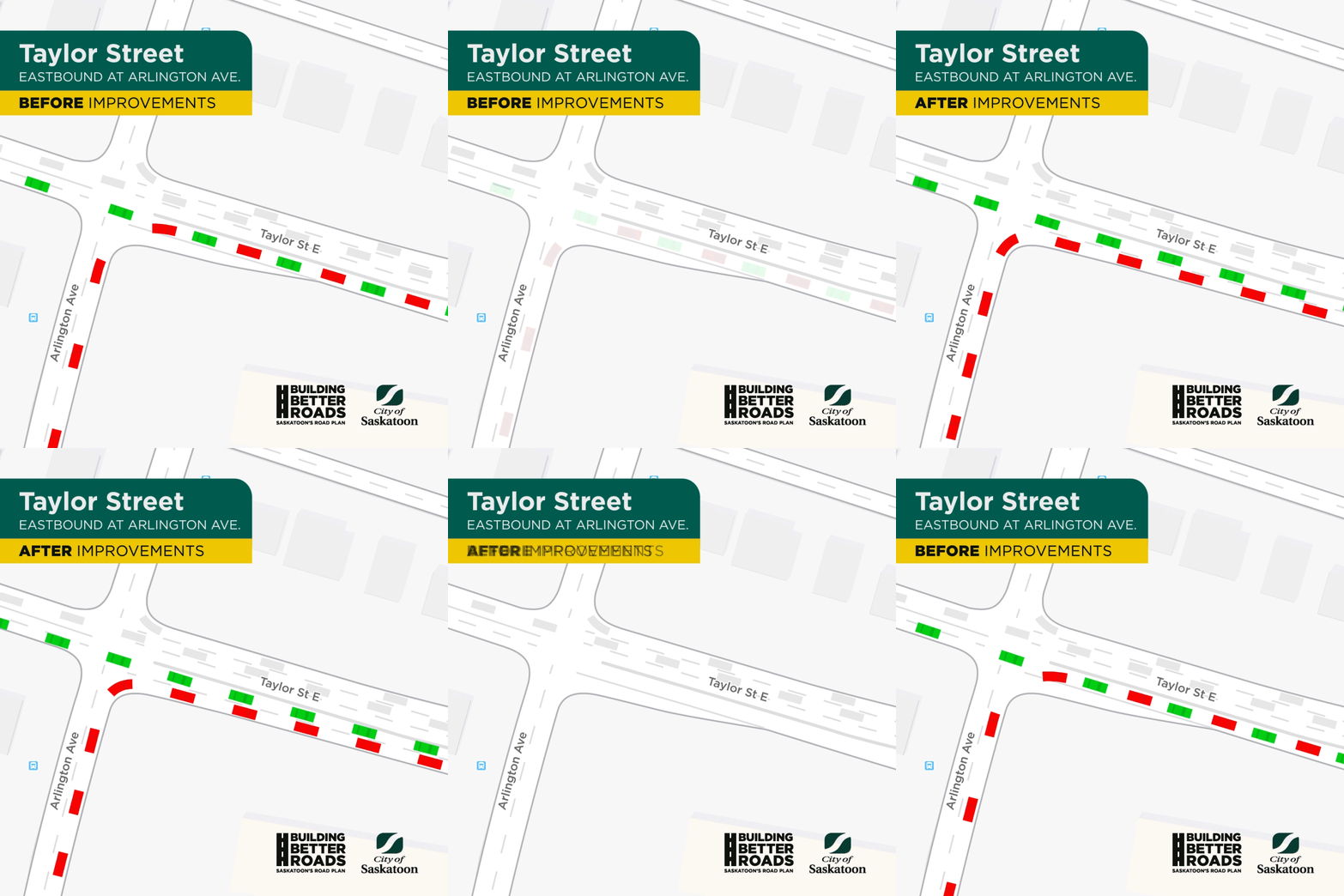
Major improvement work to begin at Taylor Street & Arlington Avenue
August 10, 2018 - 3:45am
- Widening of Taylor Street eastbound, after the Arlington Avenue intersection.
- Realignment of Taylor Street, after the Arlington Avenue intersection, to create a continuous two-lane eastbound section of roadway.
- Reconfiguration of sidewalks, concrete medians and light posts to match the realignment.
The City is set to begin major improvement work on Taylor Street eastbound, just after the intersection with Arlington Avenue. This section of roadway has been identified as an area prone to congestion. The aim of this construction work is to improve the flow of traffic through the intersection and to alleviate the congestion on Taylor Street eastbound.
“This is a pinch point that has been on our radar for some time, and I think the work we’re set to undertake is really going to improve the safety and flow of the entire Taylor-Arlington intersection,” says Tim Bushman, Engineering Manager with the Construction & Design Division. “We expect this work will reduce delays for Taylor Street road users headed eastbound. It should also improve the safety and ease of turning right onto Taylor from Arlington where we’ve observed the bus bay being used as a merging lane.”
The main improvements to be made include:
While construction is in progress, two-way traffic will be maintained on Taylor Street, but road users can expect to encounter lane restrictions and delays. Some short term turning restrictions at Taylor Street and Arlington Avenue may also be required while lane and median construction is underway. Construction will be active on the weekends as well.
To avoid conflicting with school-bound traffic come fall, the contract terms stipulate that the work at this location must be complete by August 31, barring heavy rain or unforeseen complications. Work is expected to get underway on Monday (August 13).
More information about the 2018 Building Better Roads plan is available at saskatoon.ca/betterroads. You can also access Traffic Detour Service Alerts at saskatoon.ca/servicealerts or follow @YXEServiceAlert on Twitter.
Swimming and wading in the South Saskatchewan River
August 9, 2018 - 6:09am
The Saskatoon Fire Department acknowledges that residents and visitors are looking for a place to cool down in the summer’s heat and might choose the river. If that is the case, we would like to stress the importance of doing so safely. The Saskatoon Fire Department cautions the community of the dangers associated with using the South Saskatchewan River.
As per City of Saskatoon Bylaw No. 4433, swimming in the South Saskatchewan River is prohibited within City limits. Wading, which is the act of walking through a body of water, is permitted unless otherwise posted.
Any large body of water offers an inviting environment to cool down in the summer; however, the underlying functions of the South Saskatchewan River, including strong currents and barriers to alter the flow of water, can result in a potentially dangerous situation. It’s important to remember that the South Saskatchewan River is unpredictable, and that the shore’s edge and riverbed are considered extremely unstable. Obstacles and discarded debris pose an additional threat to those choosing to use the river for recreational purposes.
Engaging in the consumption of drugs and/or alcohol when in or around the river presents an increased risk to one’s safety. These substances are capable of influencing your ability to function, and can therefore increase the likelihood of a water-related emergency.
The South Saskatchewan River can pose a significant danger when a lack of care and consideration is given to following safe practices around the river. Remember to always be cautious near larger bodies of water.
In an emergency, call 911 immediately.
Saskatoon’s progressive environmental initiatives receives $500,000 in federal funding
August 3, 2018 - 8:37am
Saskatoon continues to make strides in re-developing the environmental landscape throughout the city.
In an effort to increase local green innovation, climate change resiliency and infrastructure planning, the City has been approved for environmental funding amounting to roughly $500,000 from the Government of Canada, delivered through the Federation of Canadian Municipalities.
“Our city is at a pivotal time in how we grow and develop,” says Brenda Wallace, Director of Environmental and Corporate Initiatives“We have many opportunities to work with nature and leverage environmental initiatives for more sustainable prosperity. It’s important that these projects are not postponed for future generations; rather, we have the opportunity to act now while there are choices and options.“Through the funding received, we are able to shift toward an optimistic vision for a sustainable community.”
As growth continues, the City needs to be mindful of how old infrastructure is replaced, as well as how density is increased in established areas, and the way we interact with our environment.
“As Saskatoon continues on a course for growth, we need to be mindful of both new development areas and also abandoned, derelict, underutilized properties,” says Lesley Anderson, Director of Planning & Development. “The funding received for the Brownfield Renewal Strategy will support this major Plan for Growth initiative as we aim to assess and prioritize these types of sites along the City’s major corridors for revitalization.”
Funding from two infrastructure initiatives, the Municipalities for Climate Innovation Program (MCIP) and the Green Municipal Fund (GMF), were received for five of the City’s projects. These initiatives are about helping municipalities prepare for, and adapt to, climate change, while providing knowledge services to support sustainable community development, all with the target to reduce emissions of greenhouse gases and improve the environment.
|
Approved projects under MCIP: |
||
|
Project title |
Approved funding amount |
|
|
Natural capital asset valuation |
$125,000 |
|
|
Corporate adaptation strategy |
$125,000 |
|
|
Approved projects under GMF: |
||
|
Project title |
Approved funding amount |
|
|
Plan for Growth - Brownfield renewal strategy |
$46,400 |
|
|
Organics feasibility study |
$144,600 |
|
|
Plan for Growth - Brownfield renewal - field investigation |
$56,600 |
|
In January of this year, the City also received $125,000 for Climate Change Mitigation.
To learn more about Saskatoon’s environmental initiatives, visit saskatoon.ca/environment and for the Brownfield Renewal Strategy, visit saskatoon.ca/brownfield-renewal-strategy.
Plan for Growth projects are funded in part under the Public Transit Infrastructure Fund (PTIF) from the Government of Canada. The Government of Saskatchewan administers federal PTIF funding in the province. The City is funding the remainder of the Plan.